Common Epoxy Garage Floor Problems and How to Fix Them
An epoxy garage floor should last 10-20 years. When it fails after 6 months, something went wrong during installation. This guide covers the seven most common epoxy floor problems, what causes each one, and what you can actually do about it. Spoiler: most problems trace back to one thing — surface preparation.
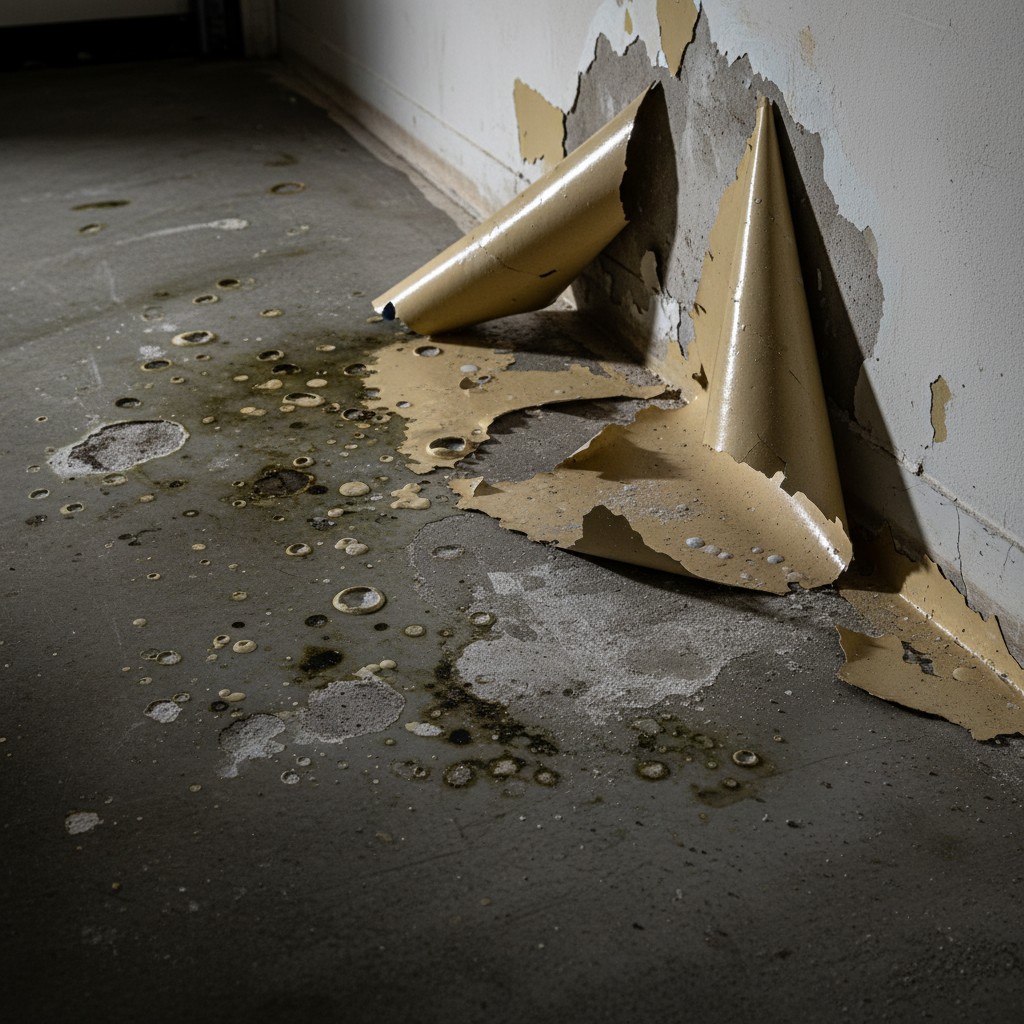
Peeling and Delamination
Peeling is the number one epoxy floor failure, and it's the most heartbreaking. You spend a weekend prepping and coating your floor, and within weeks or months, the coating lifts off the concrete in sheets. Sometimes it starts at the edges. Sometimes it starts in the middle where your tires sit. Either way, it means the coating never properly bonded to the concrete.
The causes are almost always preparation-related: The concrete wasn't profiled enough (it needs to feel like medium-grit sandpaper to the touch), oil or other contaminants weren't fully removed from the surface, or moisture was present under the slab when the coating was applied. Less commonly, the coating was applied too thick, trapping solvents that prevented full cure at the concrete interface.
The hard truth about fixing peeling: There is no reliable patch for widespread delamination. If the coating is peeling in multiple areas, the bond to the concrete has fundamentally failed. You need to strip the entire floor back to bare concrete — which means grinding off the old coating — and start over with proper surface preparation. Spot repairs over peeling epoxy will themselves peel because the surrounding coating is also poorly bonded.
The good news is that peeling is almost entirely preventable. Read our complete guide to prepping a garage floor for epoxy before your next attempt. Proper prep takes more time than the actual coating application, and that's exactly how it should be.
Bubbling and Fisheyes
Bubbles in a curing epoxy floor look alarming, and they should. Small bubbles (called outgassing) happen when air trapped in the concrete's pores escapes upward through the wet coating as the concrete warms up. Fisheyes are small craters where the coating pulls away from a contaminated spot, leaving a ring-shaped depression.
Moisture vapor transmission is the most common cause of widespread bubbling. Water vapor pushes up through the concrete slab from the ground below, and if the coating was applied over active moisture, bubbles form as the vapor tries to escape through the curing film. This is why testing your garage floor for moisture before coating is not optional — it's essential.
Surface contaminants cause isolated fisheyes. Silicone (from tire shine sprays or detailing products), oil drips, and even some cleaning product residues create spots where the epoxy cannot wet the surface properly. The coating pulls away from these spots, leaving visible craters.
Temperature-related outgassing happens when you apply epoxy to concrete that is warming up. As concrete warms, its pores expand and push air out. The best practice is to apply in the late afternoon or evening when the slab is cooling down (contracting pores draw the coating in) or early morning before the floor starts warming.
Prevention: Perform a moisture test, thoroughly degrease the floor with TSP or a dedicated concrete degreaser (rinse multiple times), and apply when the floor temperature is between 50-80°F and trending cooler.
Hot Tire Pickup
You pull into the garage after a drive, and the next morning there are perfect tire-shaped patches where the epoxy has peeled off the floor, stuck to your tires. This is hot tire pickup, and it's specifically a problem with inexpensive water-based epoxy coatings.
Why it happens: Tires can reach 200°F or higher after highway driving. When a hot tire sits on water-based epoxy, the heat softens the coating just enough for the tire to bond to it. When you drive away, the coating comes with the tire instead of staying on the floor. Higher-performance coatings like polycuramine, polyaspartic, and quality 100% solids epoxies have higher heat deflection temperatures and resist this.
Solutions:
- Upgrade your coating: A polyaspartic or polyurea top coat over your epoxy base dramatically increases heat resistance. This is the professional approach.
- Use tire mats: Simple rubber or PVC mats placed where your tires rest create a physical barrier. Budget solution at $40-60 for a set of four.
- Let tires cool: If you have a driveway, park outside for 15-20 minutes after long drives before pulling into the garage. Not always practical, but it works.
- Recoat with better product: If the damage is localized to tire areas, you may be able to sand those areas and apply a polycuramine or polyaspartic repair coat.
Yellowing and UV Damage
Your light gray epoxy floor slowly turns yellowish or amber over time, especially near the garage door or windows. This is UV degradation, and it affects almost all epoxy chemistries to some degree.
The chemistry: Epoxies contain amine hardeners that are chemically unstable when exposed to ultraviolet light. UV breaks down the molecular bonds, causing a process called ambering or chalking. Water-based epoxies yellow the most. Some 100% solids products include UV stabilizers that slow the process, but they don't stop it entirely.
Garages most at risk: South-facing doors, garages where the door is left open frequently, garages with windows (especially skylights), and garages in high-UV climates (Southwest US, high altitude).
The solution: Apply a UV-stable top coat. Polyaspartic and aliphatic polyurethane clear coats are inherently UV-stable and will not yellow. If you're choosing a system from scratch, consider a polyurea or polyaspartic system that eliminates the yellowing issue entirely. For existing floors with yellowing, sanding and applying a polyaspartic clear coat will both restore appearance and prevent further degradation.
Uneven Coverage and Roller Marks
Roller marks, thick spots, thin spots, and visible overlap lines are cosmetic problems that also affect durability. Thin areas wear through faster. Thick areas may cure improperly or remain tacky.
Common causes: Using the wrong roller nap (too thick or too thin), inconsistent pressure, failing to maintain a "wet edge" (where fresh coating overlaps the still-wet edge of the previous pass), working too slowly so the leading edge dries, or overworking an area that's already beginning to set.
Application tips for even coverage:
- Use a 3/8-inch nap roller for most epoxy products. This is thin enough for a smooth finish but thick enough to carry adequate material. Avoid foam rollers; they create bubbles.
- Work in 4x4 foot sections. Pour a line of mixed epoxy from your bucket, then spread it with the roller in one direction, working perpendicular passes to even it out.
- Maintain a wet edge at all times. Always overlap into the previous section while it's still wet. If the edge dries, you'll see a visible line in the finished floor.
- Don't overwork the material. Two or three passes in each section is enough. Going back over partially cured epoxy pulls it up and creates texture.
- Have a helper. One person cuts in edges with a brush while the other rolls the field. This keeps you ahead of the cure time.
Slow or Incomplete Cure
It's been 72 hours and your floor is still tacky. Footprints show in the surface. The coating feels soft or rubbery instead of hard and smooth. This means the chemical reaction between the epoxy resin and hardener didn't complete properly.
Temperature is the most common culprit. Epoxy is a thermosetting polymer — the curing reaction requires a minimum temperature to proceed. Below 50°F, most epoxies cure extremely slowly or not at all. The floor surface temperature matters more than the air temperature; concrete slabs can be 10-15°F colder than the air above them, especially in winter.
High humidity (above 85%) can interfere with amine-cured epoxies, causing a condition called amine blush — a waxy, whitish film on the surface that prevents proper hardening.
Incorrect mix ratios are the other major cause. Epoxy is a two-part system with a specific ratio (often 2:1 or 1:1 by volume). Adding extra hardener does not make it cure faster — it creates a brittle, improperly cross-linked film. Too little hardener leaves it permanently soft.
Minimum conditions for proper cure: Floor surface temperature of at least 50°F (use an infrared thermometer to check), relative humidity below 85%, and exact adherence to the manufacturer's mix ratio. If your garage is cold, run a space heater for 24 hours before application to warm the slab, and keep it running for the first 24 hours of cure.
How to Prevent Problems: The Pre-Application Checklist
The vast majority of epoxy floor problems are preventable. Every professional installer follows a version of this checklist, and you should too:
- Test for moisture. Use the plastic sheet test, calcium chloride test, or a digital moisture meter. If your floor fails, address the moisture before coating. See our moisture testing guide for step-by-step instructions.
- Degrease thoroughly. Use TSP (trisodium phosphate) or a dedicated concrete degreaser. Scrub with a stiff bristle brush. Rinse at least twice. Oil stains may need a poultice or multiple degreasing cycles.
- Repair cracks and divots. Fill any cracks, spalls, or divots with a concrete patch compound (check price). Allow patches to cure fully (24 hours) before profiling.
- Profile the surface. The concrete must have a texture like medium-grit sandpaper (ICRI CSP 2-3). Grind or acid etch — smooth concrete will not hold epoxy. Our prep guide covers both methods.
- Check the weather. Floor temperature 50-80°F, relative humidity below 85%, no rain expected (moisture from open doors). Use an infrared thermometer on the floor itself.
- Follow mix ratios exactly. Measure the components per the manufacturer's instructions. Mix thoroughly for the full recommended time (usually 2-3 minutes). Scrape the sides and bottom of the mixing container.
- Don't rush dry times. If the product says wait 12-16 hours between coats, wait 16. If it says 72 hours before vehicle traffic, wait 72. Epoxy gains full hardness over 7-30 days depending on the chemistry.
Related Reading
Still weighing your options? Our comparison of epoxy vs polyurea garage floor coatings can help you decide which chemistry avoids the problems most important to you. And if you're deciding between doing it yourself or hiring out, check our DIY vs professional epoxy breakdown for honest cost and quality comparisons.