Garage Floor Epoxy Colors & Decorative Flake Options
Choosing the right color and flake combination is one of the most enjoyable parts of an epoxy garage floor project — and one of the most consequential. The color you pick affects how clean your floor looks day-to-day, how well it hides imperfections, and whether you'll still love it five years from now. This guide walks through the most popular solid epoxy colors, explains what decorative flakes are and how they work, and gives you the exact quantities you need for any garage size.
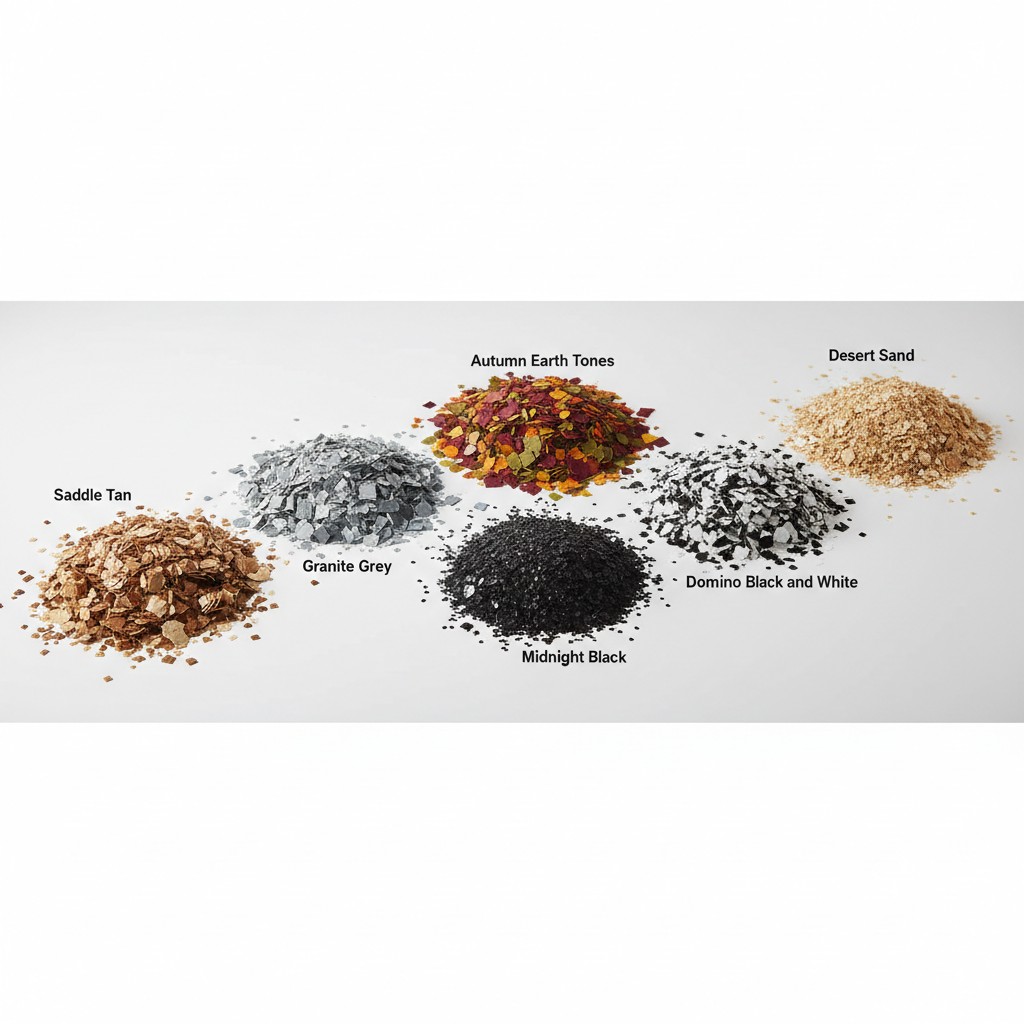
Popular Solid Epoxy Colors
Most epoxy kits offer a range of solid base coat colors. While you can find everything from bright red to deep blue, four colors dominate residential garage floors for good reason:
Gray (Medium Gray) is far and away the most popular choice, and it's not hard to see why. A medium gray tone hides concrete dust, tire marks, and general grime better than any other color. It's neutral enough to complement any wall color or cabinet setup, and it gives the garage a clean, finished appearance without looking sterile. If you can't decide, gray is always a safe bet.
Tan or Beige brings warmth to a garage, which is especially appealing in homes where the garage is visible from living spaces or doubles as a workshop. Tan tones hide dust reasonably well (better than white, not quite as well as gray) and pair naturally with earth-toned decorative flakes like saddle tan or autumn blends.
Dark Gray or Charcoal creates a dramatic, high-end look that photographs beautifully. The trade-off is practical: dark floors show dust, footprints, and water spots more readily than lighter colors. If you're willing to sweep more often, a charcoal base with light-colored flake accents can look absolutely stunning.
White delivers a bright, clean-room aesthetic that works well in showrooms and workshops where maximum light reflection matters. However, white is the highest-maintenance option — every tire mark, oil drip, and scuff shows immediately. White floors demand regular cleaning to maintain their look.
Which colors hide dirt best? From best to worst: medium gray, tan/beige, dark gray/charcoal, white. Medium gray wins because its tone closely matches the color of concrete dust and typical garage debris. If low maintenance is your priority, stick with gray or tan. Use our epoxy floor calculator to estimate material quantities once you've chosen your color.
What Are Decorative Flakes?
Decorative flakes — also called paint chips, vinyl chips, or color chips — are small pieces of vinyl or acrylic material that are broadcast (tossed) onto wet epoxy to create a multi-colored, textured finish. They're the reason professional-looking garage floors have that signature speckled appearance rather than a flat, monochrome surface.
Flakes come in two standard sizes: 1/4-inch (larger, more visible pattern, casual/residential look) and 1/8-inch (smaller, tighter pattern, more refined/commercial appearance). Some specialty blends use a mix of both sizes for added visual depth. The choice between sizes is purely aesthetic — both perform identically.
Beyond aesthetics, flakes serve three practical purposes. First, they add texture to the floor surface, which improves traction and makes the floor less slippery when wet — an important safety consideration in a garage where water, snow, and oil end up on the floor. Second, flakes hide surface imperfections like minor cracks, trowel marks, and color variations in the concrete. Third, they mask wear patterns over time, so areas of heavy foot traffic don't develop a visibly different appearance as quickly as a solid-color floor would.
Flakes are available in hundreds of pre-mixed color blends from manufacturers (check price), and you can also mix your own custom blends by purchasing individual colors and combining them. Most epoxy kit systems include a bag of flakes, though the quantity is often only enough for a light accent broadcast — you'll likely want to purchase additional flakes separately if you prefer medium or full coverage.
Flake Broadcast Levels
The density of your flake broadcast dramatically changes the final appearance. There are three standard levels, and understanding them helps you purchase the right amount of material:
| Level | Density (lbs/sq ft) | Look | Lbs Needed (2-Car, 400 sq ft) |
|---|---|---|---|
| Light | 0.02 | Accent — base color shows prominently with scattered flakes | 8 lbs |
| Medium | 0.04 | Partial coverage — base color visible between flakes (most popular) | 16 lbs |
| Heavy / Full Broadcast | 0.09 | Complete coverage — no base color visible, commercial look | 36 lbs |
Medium broadcast is the most popular for residential garages. It provides enough flake to create the classic speckled look, hide imperfections, and add grip, while still letting the base coat color influence the overall appearance. Full broadcast creates a solid, terrazzo-like surface that's extremely durable and is the standard in commercial settings — but it requires significantly more flake material and a clear top coat to lock everything in place.
Popular Flake Blends
While hundreds of blends exist, five consistently top the sales charts at major retailers and specialty suppliers:
Saddle Tan is the residential favorite. This warm blend combines tan, brown, cream, and hints of rust into a color palette that feels welcoming rather than industrial. It pairs beautifully with tan or beige base coats and complements homes with warm wood tones, brick, or stone exteriors. Saddle tan hides dirt exceptionally well because its earth tones match the natural color of most garage debris.
Granite (Salt & Pepper) is the go-to neutral blend. A mix of gray, black, white, and sometimes light blue chips, it mimics the look of natural granite countertops. This blend works with virtually any base coat color and appeals to homeowners who want a refined, understated finish. It's the most versatile option if you're unsure what you want.
Midnight is a dramatic blend of black, dark gray, and charcoal flakes with occasional silver or white chips for contrast. It creates a bold, sophisticated floor that stands out in photos and in person. Best paired with a dark gray or black base coat for a cohesive look, or with a lighter gray base for more visual contrast between the flakes and the underlying surface.
Domino (Black & White) features high-contrast black and white chips that create a striking, modern appearance. This blend makes a strong visual statement and works best with either a gray or white base coat. Domino floors photograph well and tend to appeal to homeowners looking for a more contemporary, design-forward garage aesthetic.
Autumn combines warm earth tones — rust, brown, gold, cream, and olive — into a rich, organic palette. It's a popular choice in regions with wooded surroundings or for garages that double as recreational spaces. The warm tones make the garage feel inviting and pair well with natural wood cabinetry or workbenches.
How Much Flake Do You Need?
Use this reference table to determine how many pounds of decorative flake to purchase based on your garage size and desired broadcast level. These numbers include approximately 10% extra for waste and uneven application:
| Garage Size | Approx. Sq Ft | Light (lbs) | Medium (lbs) | Heavy (lbs) |
|---|---|---|---|---|
| 1-Car | ~250 sq ft | 5 | 10 | 22 |
| 2-Car | ~400 sq ft | 8 | 16 | 36 |
| 3-Car | ~600 sq ft | 12 | 24 | 54 |
These estimates assume standard flake sizes (1/4" or 1/8"). For exact quantities tailored to your garage dimensions, use our epoxy floor calculator which factors in your specific square footage and desired broadcast level. It's always better to have a pound or two extra than to run short mid-application — once the epoxy starts to set, you can't pause to run to the store.
Check out our guide on how much epoxy you need to pair your flake calculation with the correct amount of base coat, primer, and top coat material.
Tips for Even Flake Application
Getting an even flake distribution is one of the trickiest parts of a garage floor epoxy project, especially at medium and heavy broadcast levels. The technique matters more than the product, so practice these steps before you start:
Toss flakes upward, not at the floor. This is the single most important technique. Grab a small handful of flakes and toss them gently into the air about 3-4 feet above the floor. Let gravity distribute them as they fall. Throwing flakes directly at the floor creates uneven clumps and bare spots. The upward toss lets the flakes separate in the air and land randomly across a wider area.
Work in 4x4-foot sections. Rather than trying to cover the entire floor at once, mentally divide the space into roughly 4-by-4-foot squares. Coat one section of epoxy, then immediately broadcast flakes into that section before moving to the next. This systematic approach ensures consistent density across the entire floor.
Apply within 15-20 minutes of coating. Flakes need to land in wet, tacky epoxy to stick. Most epoxy coatings remain workable for 15-20 minutes at room temperature (shorter in heat, longer in cool weather). If the coating starts to firm up, the flakes will just sit on top and won't embed properly. This is why working in sections is so important — it keeps the epoxy fresh where you're broadcasting.
Use a flake applicator tool for full broadcast. If you're doing a heavy/full broadcast, a handheld flake broadcast tool (essentially a canister with a spinning mechanism) distributes flakes more evenly than hand-tossing. They cost $20-40 and are worth the investment for large areas. Most professional installers use them.
Don't walk on coated areas. Plan your exit strategy before you start. Work from the back of the garage toward the door so you're never stepping on wet coating. Wear spiked shoes (available at paint stores for $15-20) only if absolutely necessary — they can leave marks in the epoxy that the flakes may not fully conceal.
For a deeper look at the full coating process from start to finish, including surface preparation, coating application, and curing, browse our metallic epoxy floor guide which covers application technique in detail — the flake broadcasting principles apply whether you're doing a flake or metallic system.
Related Reading
- Epoxy Floor Calculator — Get exact material estimates for your garage
- How Much Epoxy for a Garage Floor? — Coverage rates and quantity guide
- Best Garage Floor Epoxy Kits — Top-rated kits compared
- Metallic Epoxy Floor Guide — Alternative to flake for a unique look